
 Türkçe
 Deutsch
 Français

Smart lens surgery is the process of removing the natural lens of the eye that has lost its function and transparency using advanced microsurgical methods and replacing it with lifelong permanent, multifocal artificial intraocular lenses. This innovative treatment, medically known as refractive lens exchange, aims to simultaneously correct refractive errors such as myopia, hyperopia, and astigmatism, as well as age-related near vision loss (presbyopia). By minimizing patients’ dependence on glasses or contact lenses, it provides uninterrupted clarity at distance, screen, and reading ranges. This modern solution, which permanently improves visual quality, is a reliable optical restoration process that allows you to look at the world again through a clear and smooth window.
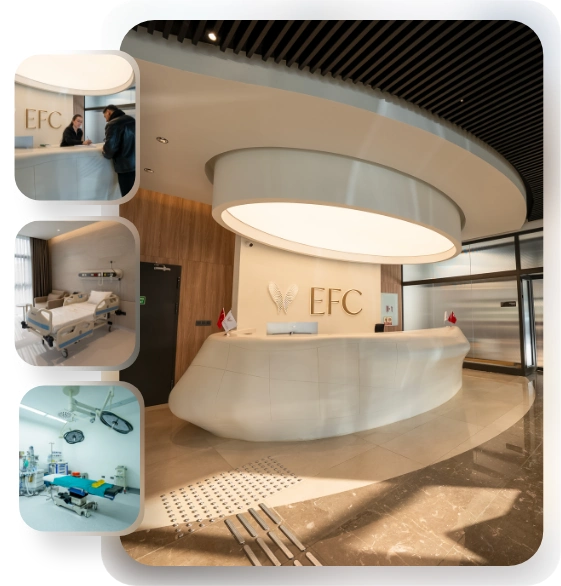
EFC Surgery Center
Comprehensive Care: From Initial Consultation to Follow-Up.
EFC Surgical Medical Center is a center of excellence specializing in the most meticulous fields of surgical medicine, from aesthetic surgery to interventional treatments—where every step progresses with refined attention. Medical excellence, aesthetic precision, and uncompromising ethical standards converge on the same path. Our subspecialty-trained experts aim to achieve natural and reliable results by delivering evidence-based care supported by modern imaging, standardized protocols, and safety systems. From consultation to recovery, your care is coordinated end-to-end with clear communication, transparent planning, and genuine respect for your health.
What is smart lens surgery?
The human eye actually resembles an advanced camera in terms of how it works. Light rays coming from outside pass through the cornea, the transparent front layer of the eye, and then reach our natural lens located just behind the pupil. At a young age, this natural lens has an extremely flexible structure. By contracting and relaxing, it changes its shape and thus helps us focus light onto the nerve layer at the back of the eye, namely the retina. However, as the years pass, like many tissues in our body, this natural lens undergoes certain structural changes and begins to lose its function. The surgical intervention that comes into play at this point involves carefully removing this flexible structure, which has started to lose its function, from its location and replacing it with a high-tech new lens capable of distributing incoming light according to different distances. This procedure, performed in accordance with the anatomy of the eye, aims to support the visual system in refocusing more efficiently.
Why does our natural lens deteriorate and why does smart lens surgery come into consideration?
The natural lens in our eye is quite active in our twenties or thirties. When we look at a nearby object, such as a book or a phone, it immediately changes shape and helps us see that object clearly. Toward the mid-forties, however, this biological flexibility gradually begins to disappear. This natural aging process, called presbyopia in medicine, is the main reason for those familiar moments when we feel the need to hold the newspaper or the menu we are reading farther away. People generally describe this situation by saying, “my arms have started to feel too short.” At older ages, this lens may lose not only its flexibility but also its glass-like transparency. We call this cataract. When transparency is lost, it creates the sensation of looking at the world as if through a constantly foggy or dirty pane of glass. The inability of the natural lens to adequately perform these two basic functions directs patients toward seeking a more permanent solution.
Who is smart lens surgery considered a more suitable option for?
This operation generally comes into consideration for individuals over the age of forty who no longer want to use reading glasses or who have early-stage cataracts. Those who spend a large part of their lives in front of a computer, frequently read books, or are bothered by the limitations imposed by glasses while exercising show greater interest in this process. At the same time, it is also a frequently considered alternative for middle-aged and older individuals whose eye structure is not found suitable for laser correction but who wish to get rid of their high-prescription glasses. Of course, every patient’s expectations, profession, and lifestyle are different. Therefore, the best option is determined through a detailed discussion with the ophthalmologist, taking the individual’s daily habits and hobbies into account.
Which detailed eye measurements are performed before smart lens surgery?
Correctly selecting the power and design of the lens to be placed inside the eye is one of the most crucial parts of the process. For this reason, before a decision is made, the eye structure is scanned almost at the micron level. Many different parameters, from the front layer of the eye to the back layer, are measured with the help of advanced technological devices. These data are used to calculate the optical compatibility of the artificial lens to be implanted with the eye. The basic measurements evaluated by physicians before the procedure are as follows:
- Biometry
- Corneal topography
- Tear analysis
- Eye pressure
- Retinal tomography
- Kappa angle
- Visual field
Which eye conditions are unsuitable for smart lens surgery?
Although this method is considered suitable for many people, some eye structures may not tolerate the light-distribution principle of multifocal lenses. The lens divides and focuses light, which requires the nerve layer at the back of the eye and the macula to be very healthy. If there is an accompanying disease affecting these layers of the eye, multifocal lenses may not provide the expected visual comfort. For this reason, some conditions in which multifocal lenses are generally not recommended are as follows:
- Advanced glaucoma
- Macular disease
- Diabetic retinopathy
- Corneal ectasia
- Keratoconus
- Advanced strabismus
- Optic nerve damage
Contact us now to get detailed information about our treatments and procedures and to schedule an appointment!
Which lens designs stand out when planning smart lens surgery?
With the advancement of technology, lens designs have also diversified to respond to patients’ different visual needs. While one patient’s priority may be simply to see distance and near as clearly as possible, for another patient computer distance may be much more critical. Some patients, on the other hand, want to be affected as little as possible by light reflections while driving at night. In order to meet these different expectations, physicians make use of various designs that direct light in different ways. The lens designs evaluated according to patients’ needs in clinical practice are as follows:
- Trifocal lenses
- EDOF lenses
- Toric lenses
- Monofocal lenses
- Hybrid lenses
How can smart lens surgery with trifocal lenses make daily life easier?
Trifocal, or three-focus, lenses are designed to distribute the light entering the eye for distance, intermediate, and near ranges thanks to the fine ring-like structure on them. This design aims to allow a very large proportion of patients to perform activities at different distances, such as watching television, looking at a computer screen, and reading messages on a mobile phone, without glasses. Especially for individuals who strain their eyes during the day by constantly switching between documents, tablets, or computer screens, the feeling of clarity at these three different distances can provide great comfort. Although dividing the light in this way into three provides a wide visual range, it may cause minor light reflections in dark environments, which many patients describe as a process that they can become accustomed to over time.
Who are smart lens surgeries with EDOF lenses more suitable for?
EDOF lenses, whose name comes from the initials of the English words “Extended Depth of Focus,” work by extending the focus channel like a tube instead of dividing light into specific focal points. One of the prominent features of these lenses is that they provide as continuous clarity as possible for distance and intermediate ranges. Since these lenses do not have the intense ring structure seen in trifocal lenses, light scatter around oncoming car headlights while driving at night generally remains at a lower level. For this reason, they are frequently recommended for professional drivers, those who drive very often at night, or those who are naturally sensitive to light. At near reading distance, however, there may sometimes be a need for low-prescription support glasses when reading very small print in a leaflet.
What kind of solution does toric smart lens surgery offer for people with astigmatism?
Astigmatism is a common refractive error caused by the cornea, the frontmost layer of the eye, being slightly oval like an American football rather than perfectly round like a basketball. If a standard-design lens is implanted in a patient with significant astigmatism, shadowing and blurred vision may continue even after surgery. Toric-design lenses were developed to help overcome this problem. Toric lenses are manufactured at an angle specific to the patient’s astigmatism and are placed inside the eye during surgery on the correct axis that will compensate for this refractive error. In this way, the lens is replaced and the patient’s longstanding astigmatism is also largely corrected within the same procedure.
What should be especially considered when deciding on smart lens surgery?
This operation is a process that must be planned in a highly individualized manner, and the patient’s satisfaction with the outcome largely depends on the alignment between the patient’s expectations and medical possibilities. At the decision stage, the patient’s lifestyle dynamics are at least as important as the eye measurements. Understanding the process in detail and establishing open communication with the physician is the healthiest approach for managing expectations correctly. Some topics that should be evaluated together with the physician during the decision stage are as follows:
- Visual expectations
- Occupational requirements
- Night driving
- Hobbies
- Reading habits
- Chronic diseases
What kind of preparation process awaits patients before smart lens surgery?
After the decision is made, the period until the day of surgery is generally quite comfortable for patients. Most of the time, people do not need to follow a special diet or restrict their daily routines. However, it is very important for healthy planning that patients using certain specific medications, such as blood thinners or prostate medications, inform their physicians about this in advance. During the few days before surgery, the use of certain moisturizing or protective drops may be requested in order to prepare the ocular surface for surgery. Staying calm during this period, getting good sleep, and carefully following the eye-drop instructions given by the physician help the process proceed more comfortably.
Contact us now to get detailed information about our treatments and procedures and to schedule an appointment!
What happens step by step at the hospital on the day of smart lens surgery?
When arriving at the clinic on the day of surgery, admission procedures are completed first, and patients are taken to a comfortable preparation room to help calm their excitement. The first critical step of the process is to dilate the pupil sufficiently. For this purpose, drops are instilled into the eye at certain intervals. When the pupil reaches the desired width and the ocular surface is sufficiently numbed, the patient is taken into the operating room. During the procedure performed under the operating microscope, the patient is only asked to look at a specific light above. The physician enters through a very small point in the eye with a microscopic instrument, removes the old lens, and places the new foldable lens through the same point. The procedure generally takes around fifteen to twenty minutes for each eye. When the procedure is completed, the eye is protected with a transparent dressing.
How are anesthesia and pain management handled during smart lens surgery?
When eye surgery is mentioned, many people may naturally think of fear of needles or general anesthesia. However, in modern eye surgery, these procedures are generally performed using only special anesthetic drops instilled into the eye. Thanks to topical anesthesia, the patient remains conscious, but because the ocular surface is strongly numbed, significant pain is not expected during the operation. The patient may only feel a slight touch, mild pressure, or the coolness of the fluids used to irrigate the eye. If the person is very stressed, some mild relaxing medications may be given to help them calm down. The fact that the process is needle-free allows patients to undergo the procedure much more comfortably.
How do the first days of recovery pass after smart lens surgery?
A short time after the surgery, the patient can walk back home or to their room. Usually, during the first check-up the next day, the protective transparent dressing on the eye is removed. As soon as the dressing is opened, many patients may report seeing brighter, less yellowed, and more vivid colors compared with before. However, minor blurriness, glare, or a mild stinging sensation in the first days are considered quite normal. It may take a few days for the mild tissue edema inside the eye to resolve and for the cornea to recover. During this early period, not allowing water to get into the eye, not sleeping face down, not rubbing the eye, and using the drops prescribed by the physician exactly on schedule against the risk of infection are the most critical parts of the process.
What are the basic rules that should be followed after smart lens surgery?
The early recovery period is of great importance for reaching the intended result in a healthy way. Since the microscopic incisions in the eye close on their own without any stitches, time must be allowed for these incisions to naturally integrate with the tissue. During this process, avoiding physical activities that may strain the ocular surface and environments that may predispose to infection is considered the most appropriate approach. The situations patients are advised to avoid for a while during the recovery period are as follows:
- Swimming pools
- The sea
- Turkish baths
- Saunas
- Dusty areas
- Windy environments
- Heavy exercise
How does the neuroadaptation process work after smart lens surgery?
When multifocal lenses are placed inside the eye, images from both distance and near simultaneously fall onto the retinal layer. Initially, the brain may experience slight visual confusion because it receives these different image signals at the same time. However, the human brain has an extraordinary neurological adaptation ability. Over time, while the visual cortex selects and clarifies the image at the distance the person wants to look at, it learns to filter out the slightly blurred background created by other distances. This biological adaptation and learning process, called neuroadaptation in medicine, generally begins in the weeks after surgery and may continue for several months. When this process is completed, the person becomes able to focus quite automatically without even thinking about the process.
How is night vision affected in patients who have undergone smart lens surgery?
Especially with lenses called trifocal lenses, which contain microscopic steps on their surface, certain optical reflections may occur in darkness as a result of light refracting while passing through these rings. Patients may see circles of light, halos, or star-like radial light scatter around streetlights or car headlights. This is a fairly common expectation in the early period. For most patients, these reflections decrease over time thanks to neuroadaptation in the brain or fall to a level where they no longer attract the person’s attention. However, as stated from the beginning, because this situation may be disturbing for people who drive continuously at night, physicians may generally find EDOF lenses with a different light-distribution pattern more suitable for these patients.
Is smart lens surgery performed on both eyes on the same day?
In current clinical approaches, both eyes are generally not operated on consecutively on the same day in order to minimize unexpected risks such as infection and to observe the healing response in the first eye. Depending on the patient’s condition and the physician’s preference, it is generally preferred to leave a rest period of a few days or one week between the two eyes. When the first eye recovers and begins to regain visual function, the same procedures are repeated for the second eye. Applying the same technology to both eyes supports faster and healthier establishment of binocular vision and depth perception in the brain, allowing the person to adapt more easily to the new vision.
Can dry eye problems occur after smart lens surgery?
The microscopic incisions made on the cornea during surgery and the antibiotic eye drops that must be used after the operation to prevent infection can temporarily disrupt the natural balance of the tear film. Therefore, symptoms of dry eye such as stinging, burning, a gritty sensation, or temporary blurred vision in the weeks following the operation are a common process. This condition is usually not permanent and can easily be brought under control with thick artificial tear drops recommended by the physician. As the months pass and the healing process is completed, the ocular surface generally regains its natural moisture capacity.
What treatments are applied before smart lens surgery in patients with dry eye syndrome?
If the patient already has a significant complaint of dry eye or surface irregularity before the operation, this condition should be improved to some extent before surgical planning. This is because a dry ocular surface can cause the vital measurements taken before surgery to be inaccurate or incomplete. The supportive treatments used before surgery in order to make an accurate lens calculation and minimize postoperative stinging are as follows:
- Artificial tears
- Tear gels
- Eyelid margin cleaning
- Warm compresses
- Omega-3 supplementation
- Punctal plugs
How long does smart lens surgery last and does it have a permanent effect?
Artificial lenses placed inside the eye are manufactured from tissue-friendly, biocompatible special acrylic materials and show a high degree of compatibility with the human body. These lenses do not deteriorate, dissolve, shrink, or lose their transparency over time. Therefore, the lifespan of this implant placed in the eye is considered equivalent to the patient’s lifetime. As the years pass, dramatic changes in eye prescription are generally not expected. For this reason, in addition to treating cataracts, this operation is considered a permanent refractive method that also largely resolves age-related near vision loss.
Can cataracts recur years later in an eye that has undergone smart lens surgery?
One of the issues patients frequently wonder about is whether the disease can return to its previous state. Since the natural lens is completely aspirated and removed during the operation, recurrence of cataract is medically not possible. However, there is a transparent and very thin natural capsule membrane in which the artificial lens is placed so that it can remain stable inside the eye. Months or years later, some microscopic cells remaining on this membrane may gradually multiply and cause the membrane to become cloudy. This condition, known among the public as “secondary cataract,” is actually not a new cataract, but merely a slight loss of transparency in the supporting membrane at the back.
How is an eye that has undergone smart lens surgery treated when secondary cataract develops?
If vision gradually becomes blurred again months or years after surgery or the person feels that they no longer see as well as before, the cause is most likely clouding of the capsule membrane. To resolve this clinical condition, the patient does not need to enter the operating room again, have an intravenous line inserted, or undergo a new incision in the eye. Under outpatient clinic conditions, while the patient sits in the examination chair, a small transparent opening is created in this clouded membrane with the help of a special laser device. The procedure generally takes seconds, no pain is felt, and vision regains its former clarity within a short time.
Is undergoing smart lens surgery at a young age considered a reasonable step?
When patients in their twenties or thirties want to get rid of high-prescription glasses, the first option is generally considered to be excimer laser correction procedures applied to the cornea. This is because at these ages the natural lens of the eye has not yet lost its flexibility, works very healthily, and has a high capacity for near focusing. Removing a healthy natural lens at that age is generally not a routine preference. However, if the person’s eye prescription is excessively high for laser treatment or if corneal thinness does not allow laser treatment, then intraocular lenses that preserve the natural lens or, rarely, lens exchange may be evaluated by the physician as a medical necessity even at younger ages.
How should nutrition and general lifestyle be after smart lens surgery?
It is not entirely correct to consider eye health independently from the body’s general circulation and overall health. In order to preserve the result obtained after surgery for many years and especially to support the vitality of the nerve cells in the back layer of the eye, establishing a diet rich in vitamins and antioxidants provides support to the body. Although it does not directly affect the outcome of lens surgery, some natural food groups recommended for maintaining general eye and macular health in daily life are as follows:
- Spinach
- Kale
- Broccoli
- Carrots
- Walnuts
- Salmon
- Almonds
Blog Posts

Hair Transplant Prices
Hair transplant prices vary depending on the technique to be used, the number of grafts, [...]
Read More
21
Jan
Jan
Most Preferred Countries for Plastic Surgery
Among the most preferred countries for plastic surgery, Turkey, South Korea, the United States, and [...]
Read More
21
Jan
Jan

Plastic Surgery Prices
Plastic surgery prices vary depending on the type of procedure, geographical location, the surgeon’s experience, [...]
Read More
21
Jan
Jan

Physical Therapy Prices
Physical therapy prices vary depending on the number of sessions to be applied, the treatment [...]
Read More
21
Jan
Jan

Dental Treatment Prices
Dental treatment prices vary depending on the type of procedure to be performed, the quality [...]
Read More
21
Jan
Jan

Most Preferred Countries for Dental Treatments
Among the most preferred countries for dental treatments are Turkey, Hungary, Mexico, and Thailand. These [...]
Read More
21
Jan
Jan