
 Türkçe
 Deutsch
 Français

Septoplasty is a functional surgical procedure that permanently enables healthy breathing by correcting deviations in the cartilage and bone wall that divides the nasal cavity into right and left sides. This intervention focuses on repairing internal structural abnormalities that directly obstruct the airway and reduce breathing quality, without causing any aesthetic change to the external appearance of the nose. Chronic air hunger, which disrupts the body’s basic oxygen balance and sleep patterns, directly drains the energy available for daily life. Reshaping anatomical obstructions according to modern medical principles restores physiological breathing dynamics to their natural flow. This allows the individual to overcome the sensation of chronic obstruction that lowers their standard of living and gain the opportunity for renewal at the cellular level.
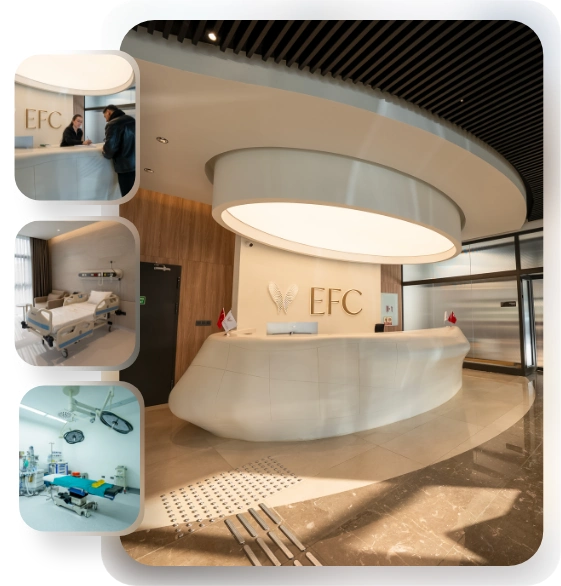
EFC Surgery Center
Comprehensive Care: From Initial Consultation to Follow-Up.
EFC Surgical Medical Center is a center of excellence specializing in the most meticulous fields of surgical medicine, from aesthetic surgery to interventional treatments—where every step progresses with refined attention. Medical excellence, aesthetic precision, and uncompromising ethical standards converge on the same path. Our subspecialty-trained experts aim to achieve natural and reliable results by delivering evidence-based care supported by modern imaging, standardized protocols, and safety systems. From consultation to recovery, your care is coordinated end-to-end with clear communication, transparent planning, and genuine respect for your health.
What Is Septoplasty?
Healthy nasal breathing is a fundamental requirement for the body’s overall oxygen balance and sleep quality. The wall inside the nose, called the septum, not only divides the airflow into two but also supports the height of the nasal bridge and ensures that inhaled air moves in a steady flow. Asymmetric growth during development, genetic predispositions, or minor injuries experienced during childhood can cause curvatures known as deviations in this cartilage and bone structure.
Because the air passage narrows at the site of the deviation, airflow dynamics are disrupted during breathing, creating turbulence inside the nose. This irregular airflow increases respiratory resistance, making it difficult for the individual to breathe comfortably. Septoplasty surgery carefully corrects these deviated cartilage and bone sections, restoring the air passages to their natural width. The fundamental philosophy of the procedure is to reshape only the excess tissue or bends causing the obstruction without weakening the main support points that hold up the nasal framework. This allows the individual to breathe quietly and calmly through natural pathways without needing to open their mouth.
What Symptoms Does a Successful Septoplasty Address?
Insufficient nasal breathing is not merely a physical sensation of obstruction; over time, it can pave the way for a chain of problems affecting the entire metabolism. Although symptoms caused by the deviation vary from person to person, certain common signs indicate the need for surgical intervention.
Some common symptoms include:
- Nasal obstruction
- Facial pain
- Snoring
- Sleep apnea
- Loss of smell
- Nosebleeds
- Postnasal drip
Examining these symptoms in detail makes the broad impact of nasal obstruction easier to understand. Chronic obstruction that does not respond to nasal decongestant sprays or allergy medications is the problem patients report most frequently. Constant contact between spur-like projections on the cartilage and the lateral nasal wall can stimulate nerve endings, causing persistent facial pain and headaches. In addition, restricted airflow causes the soft palate to vibrate during sleep, increasing snoring and creating conditions that can worsen sleep apnea. When inhaled air cannot adequately reach the olfactory nerves, problems with the sense of smell occur, while air repeatedly striking the same narrow area can dry out the mucosa and cause frequent recurrent bleeding. Such findings help guide the decision to perform septoplasty.
What Steps Are Taken During the Diagnostic Process Before Septoplasty?
A detailed mapping process is essential for accurate surgical planning in a patient presenting with breathing difficulties. A thorough investigation determines whether the obstruction is caused solely by the cartilage or whether enlarged turbinates or a sinus problem are also present.
The assessments planned before surgery include:
- Physical examination
- Endoscopic examination
- CT scan
- Breathing analysis
- Blood tests
During the physical examination, the cartilage support at the nasal tip and the airway entrance are checked. Camera-based examination systems allow access deep into the nasal cavity to identify bony deviations in the posterior areas that cannot be seen using conventional methods. CT scans may be used to assess the condition of the sinus passages, particularly in individuals with a history of sinusitis or complex problems in the posterior region. Standard blood counts and coagulation tests are also performed to assess whether the patient is suitable for general anesthesia. Based on all these findings, the scope of the operation is determined according to the patient’s anatomical structure.
Contact us now to get detailed information about our treatments and procedures and to schedule an appointment!
Why Is the Tissue-Preserving Philosophy of Septoplasty Important?
Historically, nasal surgeries involved cutting out and removing a large portion of the deviated cartilage and bone inside the nose. Over time, however, it became better understood that the cartilage inside the nose is not merely a dividing wall but also the main pillar supporting the nose’s external appearance. Removing too much cartilage could cause the nasal bridge to collapse or the nasal tip to droop in the long term.
Today, the tissue-preserving approach takes priority. Internal tissues are regarded not as excess material to be discarded but as valuable building blocks that should be corrected and reused. During the procedure, the supporting strip of cartilage extending along the nasal bridge and tip, known as the “L-strut,” is preserved with great care. The remaining deviated sections are straightened using various methods and placed back in their original position as a supporting barrier. This philosophy significantly reduces the risks of structural weakness after surgery.
How Is the Closed Septoplasty Technique Performed?
Closed septoplasty, one of the most commonly performed methods, is carried out entirely through the nostrils without any external incisions. The procedure begins with a small incision in the mucosal membrane lining the inside of the nose. This membrane is carefully lifted away from the underlying cartilage and bone tissue like a thin covering.
Once the membrane has been lifted, the cartilage sections causing the deviation are exposed. After leaving the main framework supporting the nasal structure in place, the deviated portions narrowing the airway are freed. The removed cartilage is usually straightened by crushing it with special instruments or making small scoring incisions on its surface. Once their tension has been released, these tissues are placed back flat between the two mucosal membranes. In the final stage, the mucosal layers are secured to each other with self-dissolving sutures. When used in the appropriate patient group, this technique has the potential to deliver highly satisfactory results.
When Is Endoscopic Septoplasty Preferred?
Endoscopic systems are used in specific cases where the deviation is located predominantly in the posterior regions and deeper bony structures rather than the front of the nose. This method generally does not require extensive tissue dissection.
During the procedure, the surgeon uses advanced optical cameras to obtain a much more magnified and clear view of the inside of the nose. A small entry point is made immediately in front of the bony projection in the posterior area where the deviation is located, allowing precisely targeted intervention. Because the surrounding healthy tissues are left untouched, postoperative tissue swelling (edema) remains minimal. It stands out as a particularly comfortable option that shortens recovery time for patients with localized deviations situated further back in the nose.
Which Challenging Deviations May Require Open Septoplasty?
The cause of nasal obstruction may not always be a simple deviation of the internal wall. Sometimes the individual may have sustained a severe impact in the past, or the cartilage structure may have become complex enough to form an ‘S’ shape. In addition, when the lowermost supporting cartilage of the nose has shifted completely out of position, it may be physically impossible to resolve the problem using closed methods.
The open septoplasty technique is used in such complex cases. Through a small incision beneath the nasal tip, the tissues are lifted to allow direct visualization of the entire cartilage framework. The cartilaginous framework, completely freed from the surrounding tissues, is reconstructed outside the nose if necessary and then placed back inside together with supporting patches (grafts). This allows even the most challenging structural abnormalities to be reconstructed through detailed engineering under a broad field of view.
Why Is Turbinate Reduction Performed Alongside Septoplasty?
The dynamics inside the nose are closely interconnected. When the septum deviates to the right or left, one side narrows while the other widens. To improve the quality of the air passing through the wider side, the body attempts to fill the space by enlarging the turbinates in that area. Over time, this enlargement becomes permanent.
If the septum is moved to the midline during septoplasty but the enlarged turbinate is not reduced, a new obstruction develops on the other side. To prevent this paradoxical situation, turbinate reduction is generally performed in the same session as the septal procedure. Today, radiofrequency energy that does not damage the tissue is frequently used for this procedure. Controlled heat waves delivered into the tissue cause the turbinate to contract and permanently decrease in size. Avoiding damage to the air-filtering cilia on the mucosal surface during the procedure supports the quality of postoperative healing.
Can Septoplasty and Sinus Surgery Be Performed Together?
In some cases, a deviated septum mechanically obstructs the narrow channels through which the sinuses open into the nose, creating conditions for chronic sinusitis. The sinuses, unable to receive air, become filled, and recurrent infections occur.
When multiple problems of this kind are present, functional airway surgery is considered as a whole. During the same surgical session in which the deviation is corrected, endoscopic instruments are used to access and widen the blocked sinus passages. These two procedures complement each other very well because straightening the septum makes it easier for the surgeon to reach the sinuses. This gives the individual the opportunity to obtain simultaneous relief from both airway obstruction and chronic sinusitis under a single anesthetic.
Contact us now to get detailed information about our treatments and procedures and to schedule an appointment!
What Experience Does New-Generation Nasal Packing Offer After Septoplasty?
One of patients’ greatest long-standing fears about surgery concerns the gauze packing placed inside the nose and the difficulties experienced during its removal. These long strips of gauze, formerly used to stop bleeding, could both obstruct breathing and cause pain when removed.
In current approaches, however, these practices have given way to modern technology. Thin, flexible supporting plates (splints) made of medical-grade silicone are now placed inside the nose at the end of the procedure. These silicone splints contain grooved air channels. This allows patients to continue breathing through their nose, even if only slightly, from the moment they wake up after surgery. Because they do not adhere to the tissues, these silicone supports can be slid out painlessly within seconds in an outpatient setting a few days later. This innovation has made the postoperative period considerably more comfortable.
What Stages Can Be Expected During Recovery After Septoplasty?
Thanks to tissue-respecting surgical techniques and modern materials, recovery is considerably more comfortable than in the past. Although the body’s rate of self-repair varies from person to person, a general timeline can be outlined.
The main milestones during recovery are:
- Early swelling phase
- Removal of silicone supports
- Regeneration of the mucosa
- Resolution of the crusting phase
- Complete settling of the internal structure
Natural swelling (edema) inside the nose and slight pinkish discharge are considered normal during the first few days. A noticeable sense of relief is felt when the internal silicone supports are removed at the end of the first week. However, it may take several weeks for the tissues to recover completely and for the sutures to dissolve, allowing the mucosa to regain its previous health. Occasional crusting during this period is expected. Generally, the airway becomes largely open after one month, while the connective tissue inside matures over the following months to reach the final result. Since bone-breaking procedures for aesthetic purposes are not performed, significant facial bruising or externally noticeable swelling is not generally expected.
What Rules Should Be Followed After Septoplasty?
Postoperative care is as critical as the success of the operation in achieving a healthy outcome. There are several simple but effective rules patients should follow to help the tissues adapt to their new positions and minimize the risk of bleeding.
Some precautions patients are expected to follow during recovery include:
- Keeping the head elevated
- Avoiding nose blowing
- Taking lukewarm showers
- Sneezing with the mouth open
- Avoiding strenuous exercise
- Using seawater nasal sprays
Keeping the head elevated on a few pillows while lying down during the first days helps prevent potential discharge and edema by reducing blood pressure in the face. Blowing the nose or sneezing with the mouth closed is strongly discouraged during the first weeks because it increases pressure inside the nose. Taking showers with lukewarm water is safer, as hot water can dilate blood vessels and trigger bleeding. In addition, taking a break for several weeks from activities such as weightlifting or intense cardio that significantly increase the heart rate accelerates tissue healing. Saline sprays recommended by the physician soften the healing crusts inside the nose and provide substantial support to its natural cleaning mechanism.
What Are the Potential Risks and Expectations of Septoplasty Surgery?
Septoplasty procedures performed by experienced hands following an accurate anatomical assessment are reliable surgeries that provide very high patient satisfaction. Positive changes such as improved breathing quality, better sleep patterns, and waking up feeling more refreshed are expected after the procedure.
Some unwanted conditions that may arise due to the nature of the operation include:
- Bleeding
- Infection
- Recurrence due to cartilage memory
- Perforation of the nasal septum
- Changes in the sense of smell
Although quite rare, there is a risk of bleeding or tissue infection, as with any surgical intervention. Sometimes, when the mucosal membrane is excessively thin, injuries may occur on opposing sides, leaving a small opening (perforation) in the nasal septum. Because cartilage structures have their own natural elastic memory, it is possible, although uncommon, for the cartilage to show a tendency to return to its previous curved shape during the months of healing. When such situations develop, efforts are made to overcome the problems through additional medical treatments or minor secondary corrections. Looking at the overall picture, however, septoplasty is an intervention with the potential to improve an individual’s standard of living very significantly when performed for the correct indication. Cartilage-preserving approaches and modern technologies that accelerate healing greatly facilitate patients’ journey toward healthy breathing.
Blog Posts
Hair Transplant Prices
Hair transplant prices vary depending on the technique to be used, the number of grafts, [...]
Read More
21
Jan
Jan
Most Preferred Countries for Plastic Surgery
Among the most preferred countries for plastic surgery, Turkey, South Korea, the United States, and [...]
Read More
21
Jan
Jan
Plastic Surgery Prices
Plastic surgery prices vary depending on the type of procedure, geographical location, the surgeon’s experience, [...]
Read More
21
Jan
Jan

Physical Therapy Prices
Physical therapy prices vary depending on the number of sessions to be applied, the treatment [...]
Read More
21
Jan
Jan

Dental Treatment Prices
Dental treatment prices vary depending on the type of procedure to be performed, the quality [...]
Read More
21
Jan
Jan
Most Preferred Countries for Dental Treatments
Among the most preferred countries for dental treatments are Turkey, Hungary, Mexico, and Thailand. These [...]
Read More
21
Jan
Jan