
 Türkçe
 Deutsch
 Français

Varicocele surgery is a surgical procedure performed to repair a vascular problem caused by the gradual enlargement of the veins in the scrotum and deterioration of their internal valve system. This condition, which directly affects male reproductive health, requires permanently stopping the abnormal blood flow that pools around the testicle and prevents the tissue from functioning normally. The main purpose of surgical intervention is to disable this damaged network of veins and restore the healthy environment the testicles need to function. This aims to preserve reproductive capacity as effectively as possible by removing the physical obstacles that threaten sperm and hormone production.
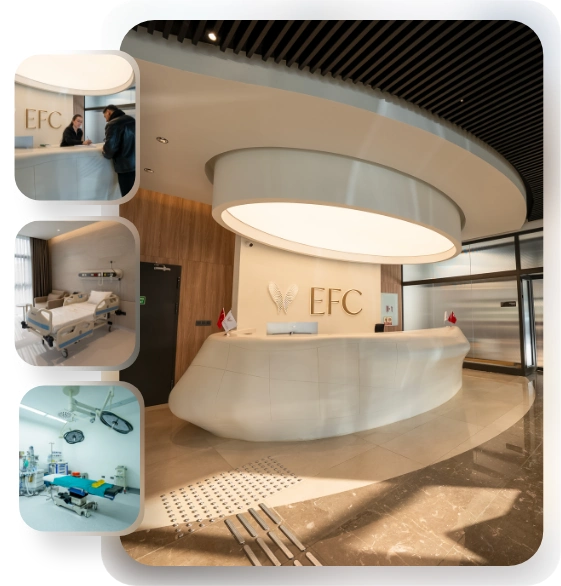
EFC Surgery Center
Comprehensive Care: From Initial Consultation to Follow-Up.
EFC Surgical Medical Center is a center of excellence specializing in the most meticulous fields of surgical medicine, from aesthetic surgery to interventional treatments—where every step progresses with refined attention. Medical excellence, aesthetic precision, and uncompromising ethical standards converge on the same path. Our subspecialty-trained experts aim to achieve natural and reliable results by delivering evidence-based care supported by modern imaging, standardized protocols, and safety systems. From consultation to recovery, your care is coordinated end-to-end with clear communication, transparent planning, and genuine respect for your health.
What is a varicocele?
The testicles, among the most important parts of the human reproductive system, need an environment a few degrees cooler than body temperature to produce healthy sperm cells. Our bodies have developed a highly detailed cooling mechanism to maintain this delicate temperature balance. The arteries carrying oxygenated blood to the testicles and the veins collecting and removing deoxygenated blood from them form a complex, intertwined network. Through this network, the surrounding veins work to cool the warm arterial blood arriving from inside the body before it reaches the testicle.
Under normal circumstances, veins contain thin valves that prevent blood from flowing backward under the effect of gravity. In individuals who develop a varicocele, these valves become structurally weakened or can no longer perform their function. When the valves do not close completely, blood that should be pumped upward flows backward under gravity and begins to accumulate in the network of veins around the testicle. As pressure continually increases, the veins gradually enlarge, become tortuous, and gather around the testicle. Consequently, the delicate cooling mechanism that the testicles depend on is disrupted, and the temperature inside the testicles begins to rise to undesirable levels.
Why is a varicocele usually more common in the left testicle?
Clinical assessments show that the vast majority of varicoceles occur in the left testicle. The main reason lies in certain structural differences in human anatomy. The vein carrying deoxygenated blood from the left testicle has to travel a much longer anatomical route than the vein on the right. In addition, this long vein joins the left renal vein at an almost right angle. The vein from the right testicle follows a shorter route and drains into the main vein at an acute angle that allows smoother flow.
This right-angled anatomical connection on the left creates a barrier effect that physically makes it more difficult for blood to drain toward the heart. In addition, the long fluid column formed by the left vein causes gravity-related pressure within the vein to be significantly higher than on the right. All these structural challenges expose the valves in the left testicular vein to greater pressure over time, making them more likely to lose their function. A varicocele occurring only in the right testicle is quite rare and may generally require a detailed investigation of other medical conditions causing external pressure on the veins within the abdomen.
How are testicular tissue and sperm quality damaged in patients with a varicocele?
Rather than arising from a single cause, the damage a varicocele causes to the male reproductive system results from a combination of adverse factors that trigger one another. The main changes occurring in testicular tissue are:
- Increased temperature inside the testicle
- Reduced tissue oxygenation
- Accumulation of toxic waste products
- Increased oxidative stress
- Damage to sperm DNA structure
Warm blood pooling around the testicle brings the temperature inside it closer to body temperature and begins to disrupt the structure of sperm-producing cells. These highly heat-sensitive cells slow down their production activities as the temperature rises. At the same time, deoxygenated blood remaining around the testicle for prolonged periods also restricts flow through the arteries that bring fresh, oxygenated blood to the tissue. Production is adversely affected in testicular tissue deprived of oxygen and nutrients.
In addition, certain metabolic waste products originating from the kidneys and adrenal glands can flow backward through the defective valves and reach the testicle directly. This increases the amount of harmful molecules known as oxygen free radicals, causing considerable cellular stress. This increased cellular stress can limit sperm motility, distort sperm shape, and damage the sperm’s genetic material. Sperm carrying genetic damage can make it more difficult for pregnancy to begin and can also adversely affect healthy embryo development.
What symptoms does a varicocele cause, and what do patients feel?
A varicocele does not always present with obvious or pronounced symptoms. In many individuals, it may be discovered entirely by chance during a routine assessment or an infertility investigation. In some cases, however, sensations that affect patients’ quality of life may develop. The main symptoms most frequently reported by patients are:
- Dull testicular pain
- An aching sensation radiating to the groin
- Prominent veins in the scrotum
- Scrotal sagging and a feeling of heaviness
- Shrinkage of the affected testicle
- A sensation of localized sweating
The most typical symptom in symptomatic patients is a dull, dragging pain in the scrotum. This pain is generally very mild or absent in the morning but becomes increasingly noticeable during the day with prolonged standing, physically demanding work, or brisk walking. When the person lies on their back to rest in the evening, the blood drains from the veins as the effect of gravity is removed, and the pain usually subsides on its own. As the condition progresses, the enlarged veins may become visible as twisted structures over the scrotum.
Contact us now to get detailed information about our treatments and procedures and to schedule an appointment!
How is a varicocele diagnosed in a clinical setting, and which methods are used?
The most reliable approach to diagnosing a varicocele is a meticulous physical examination performed under appropriate conditions. It is particularly important for the examination to take place in a warm, comfortable room. In a cold environment, the muscles controlling the scrotum may contract reflexively, constricting the veins and making diagnosis more difficult.
During the examination, the patient is generally assessed both standing and lying down. The physician may ask the patient to take a deep breath, expand their abdomen, and strain. This maneuver increases intra-abdominal pressure, pushes the backflowing blood toward the testicular veins, and helps make the varicocele more apparent. The condition is graded according to the physical examination findings.
Color Doppler ultrasonography is used as an additional tool in uncertain cases where the physical examination is inconclusive, when the patient’s body build makes examination difficult, or when recurrence is suspected. Doppler ultrasound provides valuable information by measuring vein diameters and calculating how long blood flows backward during straining. However, when planning treatment, it should be remembered that ultrasound results alone do not determine the decision and must be assessed together with the clinical examination findings.
Does every patient diagnosed with a varicocele need surgery?
The belief that everyone diagnosed with a varicocele must undergo surgery without delay is a widespread misconception. The decision to operate is made according to specific criteria, taking into account the patient’s overall condition and reproductive health goals. General circumstances supporting surgical intervention include:
- A diagnosis of infertility
- Abnormal parameters on semen analysis
- A clearly detectable varicocele on physical examination
- Normal reproductive health in the female partner
- Progressively declining sperm parameters during follow-up
- A significant reduction in testicular size
- Severe pain affecting daily life
Surgical repair becomes an important option for individuals meeting these criteria, particularly those who wish to have children and whose sperm parameters are declining. Surgery is generally not recommended for early-stage varicoceles detected only by ultrasound and not identifiable on physical examination, because its contribution to reproductive capacity is not sufficiently clear. During adolescence, even when there are no plans to have children yet, a significant difference in testicular size or the beginning of a decline in sperm parameters during follow-up is considered a warning sign when deciding on surgery. In patients with pain, simple measures such as supportive underwear and lifestyle adjustments are generally tried first; surgery may be considered if these do not help.
Are there medications or herbal treatments for a varicocele other than surgery?
Whether a varicocele can resolve with medication, various creams, or herbal mixtures is a common question. A varicocele is fundamentally an anatomical and physical problem of the veins. It involves structural deformation of the valves within the vein and physical enlargement of the vein itself. Just as with an inguinal hernia, there is no medication or herbal treatment that can reverse this mechanical problem, restore the vein to its original form, or repair its valves.
Although some commercially available vitamin supplements or antioxidant pills may provide temporary improvements in sperm parameters by somewhat reducing the stress on the testicles, they cannot repair the venous backflow that is the underlying cause of the condition. Because the root cause is a physical abnormality, a lasting and logical solution is only possible through a surgical intervention that physically eliminates the abnormal venous flow.
Which varicocele surgery methods have been used from the past to the present?
The history of varicocele treatment stretches back many years, during which surgical techniques have undergone major changes. The principal surgical methods that have stood out over time are:
- Open retroperitoneal technique
- Open inguinal approach
- Laparoscopic surgery
- Radiological vein occlusion (embolization)
- Microsurgical varicocele repair
Open surgical techniques performed more frequently in the past, without a microscope and relying solely on the surgeon’s unaided vision, carried a higher likelihood of unwanted outcomes. Because the human eye has a limited ability to distinguish very fine vessels, there was a possibility of damaging the testicular lymphatic vessels or the main artery. Ligation of lymphatic vessels could lead to fluid accumulation in the scrotum later on, while overlooked backflow through tiny vessels increased the risk of recurrence.
Today, laparoscopic procedures are generally not among the first-choice methods because they require entry into the abdominal cavity and general anesthesia, while radiological embolization is generally not a first choice because of contrast agent use and technical feasibility challenges.
Contact us now to get detailed information about our treatments and procedures and to schedule an appointment!
Why is microsurgical varicocele surgery the most preferred method today?
As technological advances in medicine have been incorporated into surgical practice, microsurgery has become much more widely preferred for varicocele repair. The most important feature distinguishing this method is that the operation is performed under a specialized surgical microscope, magnifying the operating field many times over.
With microscope assistance, transparent lymphatic vessels measuring less than a millimeter in diameter and small arteries carrying oxygenated blood to the testicle can be distinguished very clearly. This improved visual clarity makes it easier to preserve healthy vessels while also allowing all the small veins with backflow to be identified completely. As a result, the microsurgical approach largely preserves the organ’s blood supply, substantially prevents complications such as fluid accumulation, and reduces the likelihood of recurrence to very low levels compared with other methods.
How are the steps of subinguinal microsurgical varicocele surgery performed?
Depending on the patient’s condition and preferences, microsurgical varicocele surgery can be performed under general anesthesia, with anesthesia numbing the body below the waist, or under local anesthesia combined with light sedation.
The procedure begins with a small incision a few centimeters long, made just below the groin along a skin crease. Entering through this area offers a major advantage: there is no need to cut the abdominal muscles or thick muscle sheaths. Preserving muscle integrity reduces postoperative wound pain and makes recovery much more comfortable.
After passing through the tissues beneath the skin, the cord containing the vessels leading to the testicle is located and brought to the surface. At this stage, the operating microscope is positioned over the surgical field. Under the microscope, the membrane surrounding the cord is opened and the vascular network is examined. The first priority is to identify and separate the artery bringing oxygenated blood to the testicle. The artery is identified by observing its pulsations; when necessary, special devices that detect the faint sounds of blood flow are used to help confirm its location with a high degree of confidence.
The lymphatic vessels are then carefully separated and moved aside to prevent fluid accumulation. In the final stage, all enlarged veins responsible for the varicocele are identified and tied off using special surgical sutures or clips to disable them. Once the pooling of blood around the testicle has been stopped, the tissues are returned to their anatomical positions. The skin is closed with cosmetic, absorbable sutures, and the operation is usually completed without the need for tubes such as drains that could cause the patient additional discomfort.
How do rest and recovery at home progress after varicocele surgery?
Because microsurgery handles tissues gently, patients can generally be discharged and return home on the day of surgery. Following several hours of observation in the hospital, patients go home once they have resumed eating and can stand up comfortably. The main recommendations for recovery at home are:
- Applying ice at regular intervals
- Wearing underwear that supports the testicles
- Avoiding strenuous movements and resting regularly
- Drinking plenty of fluids and eating a balanced diet
- Taking prescribed medications regularly
During the first two days at home, intermittent ice application provides relief and helps prevent swelling or bruising around the wound. In addition, wearing snug underwear that gently lifts and supports the testicles during the first weeks reduces the downward pull of gravity on the surgical area and largely prevents aching during movement. Because the sutures used are usually self-dissolving, they do not need to be removed later, and patients can take a lukewarm shower while standing within a few days, taking care not to irritate the wound.
When can patients return to daily life and sexual activity after varicocele surgery?
The time required to return to work and daily activities after surgery depends largely on how physically demanding the person’s work is. Individuals with desk jobs or work that does not require physical exertion can generally return comfortably after a few days of rest at home. Strenuous activities that increase intra-abdominal pressure, such as fitness training, carrying heavy objects, and football, should be avoided for approximately four to six weeks to allow the tissues to heal properly.
The timing of a return to sexual activity is also important for wound healing. Because varicocele surgery is performed in an area separate from the vessels and nerves supplying the penis, it does not adversely affect erectile function. However, sexual arousal and particularly contractions during ejaculation or fluctuations in blood pressure in the early postoperative period may place mechanical stress on the recently treated vessels. Patients are therefore generally advised to abstain from sexual activity for the first two to three weeks. After this period, the healing tissue reaches sufficient strength, and normal sexual activity can resume.
How do sperm quality and the likelihood of having children change after varicocele surgery?
Although surgery removes the unfavorable conditions around the testicle, improvements in sperm parameters do not appear in laboratory tests the very next day. In the human body, the production of a sperm cell from its earliest stage, its maturation, and its entry into semen require a biological cycle of approximately two and a half to three months. This period must therefore pass before the healthier sperm that begin to be produced immediately after surgery can be ejaculated.
Patients are generally invited for their first follow-up semen analysis three months after surgery, but the six-month follow-up is when sperm production capacity and quality can be assessed most clearly. After microsurgical repair, many patients show significant improvements in total motile sperm count and the structural morphology of sperm cells. Reductions in the rate of sperm DNA damage are also detected.
This recovery in sperm quality increases couples’ chances of conceiving naturally and also supports the potential success of insemination or in vitro fertilization in couples who need assisted reproductive techniques.
What are the possible risks and the likelihood of recurrence after microsurgical varicocele surgery?
Certain general healing risks inherent in any surgical procedure also apply to this operation. Potential risks associated with the microsurgical method, which requires experience, include:
- Wound infection
- Mild bleeding or bruising beneath the skin
- Fluid accumulation in the scrotum (hydrocele)
- Recurrence of the condition in later years
- Impairment of the blood supply to testicular tissue
Compared with conventional methods, microsurgical operations performed using advanced microscope systems reduce the likelihood of these risks to very low levels. Clearer visualization and preservation of the lymphatic vessels significantly reduce the possibility of fluid accumulation, while meticulous identification and ligation of vascular variations substantially reduce the risk of recurrence. Carefully separating the testicular artery under the microscope also makes problems with the tissue’s blood supply very rare. Ultimately, a varicocele is a condition that can be treated when it threatens reproductive health, with microsurgical approaches aiming to correct it while preserving overall health.
Blog Posts
Hair Transplant Prices
Hair transplant prices vary depending on the technique to be used, the number of grafts, [...]
Read More
21
Jan
Jan
Most Preferred Countries for Plastic Surgery
Among the most preferred countries for plastic surgery, Turkey, South Korea, the United States, and [...]
Read More
21
Jan
Jan

Plastic Surgery Prices
Plastic surgery prices vary depending on the type of procedure, geographical location, the surgeon’s experience, [...]
Read More
21
Jan
Jan

Physical Therapy Prices
Physical therapy prices vary depending on the number of sessions to be applied, the treatment [...]
Read More
21
Jan
Jan

Dental Treatment Prices
Dental treatment prices vary depending on the type of procedure to be performed, the quality [...]
Read More
21
Jan
Jan
Most Preferred Countries for Dental Treatments
Among the most preferred countries for dental treatments are Turkey, Hungary, Mexico, and Thailand. These [...]
Read More
21
Jan
Jan