
 Türkçe
 Deutsch
 Français

Cesarean section is a major birth surgery in which the baby is delivered through a controlled surgical incision made in the abdominal and uterine walls when medical necessities arise that threaten the health of the mother or the baby. This safe medical intervention, applied in situations where natural vaginal birth is physiologically impossible or carries vital risks, is performed according to objective standards established by international health guidelines. The main aim is to complete the pregnancy process in the safest possible way, protect the mother, and ensure that the baby begins life with healthy bodily integrity. The procedure is carried out with advanced anesthesia methods and under fully equipped operating room conditions to safeguard the health of both parties.
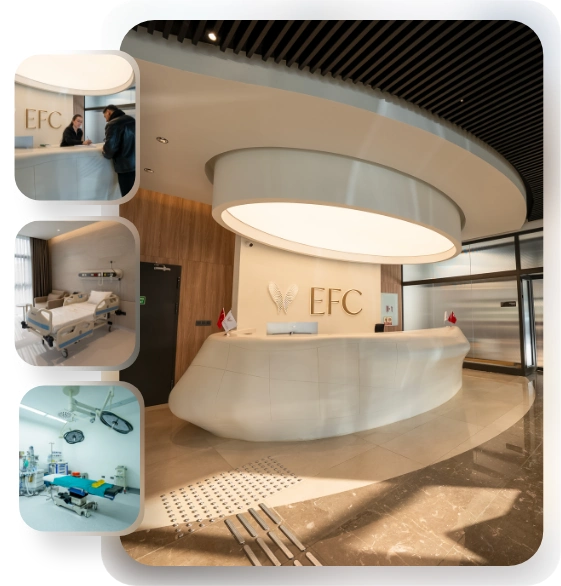
EFC Surgery Center
Comprehensive Care: From Initial Consultation to Follow-Up.
EFC Surgical Medical Center is a center of excellence specializing in the most meticulous fields of surgical medicine, from aesthetic surgery to interventional treatments—where every step progresses with refined attention. Medical excellence, aesthetic precision, and uncompromising ethical standards converge on the same path. Our subspecialty-trained experts aim to achieve natural and reliable results by delivering evidence-based care supported by modern imaging, standardized protocols, and safety systems. From consultation to recovery, your care is coordinated end-to-end with clear communication, transparent planning, and genuine respect for your health.
In Which Situations Is Cesarean Section Preferred in Terms of the Expectant Mother’s General Health?
Although childbirth is a natural function of the female body, it requires the body to demonstrate a certain level of physical effort and endurance. Some anatomical or structural conditions may not allow the baby to pass safely through the birth canal. For example, congenital or acquired deformities in the pelvic bone structure may physically stop the baby’s progress. In addition, structures such as large fibroids that narrow or completely block the birth canal may also make surgical delivery a medical necessity.
Apart from anatomy, some chronic diseases of the expectant mother may also not be at a level that can tolerate the stress of childbirth. Especially in serious conditions that strain the capacity of the heart and lungs, surgical planning may be considered a safer approach in order to avoid the physical burden of prolonged labor. In addition, an active infection can also pose a risk to the baby. In particular, if there is an active genital herpes infection in the birth canal, direct intervention through the abdomen is preferred in order to prevent transmission of the virus to the baby. Sometimes, even though there is no physical problem, the expectant mother may have severe fear of childbirth (tocophobia) that cannot be overcome with treatment and turns into intense panic. In such severe psychological distress, a surgical approach may be considered in order to protect the mother’s mental integrity.
In this context, some medical necessities related to the mother are as follows:
- Narrow pelvic bone structure
- Active infections
- Advanced heart failure
- Severe lung diseases
- Masses obstructing the birth canal
- Pelvic floor injuries
- Severe fear of childbirth
How Do the Baby’s Condition and Placental Position Affect the Decision for Cesarean Section?
Sometimes, even if the expectant mother is completely healthy, the baby’s development in the womb or the position of the placenta inside the uterus may require surgical intervention. The baby’s heart rate in the womb is closely monitored during or before labor. If serious and persistent slowing of the heart rate indicating that the baby is deprived of oxygen is detected during these monitorings, surgery is performed to restore the baby’s health as quickly as possible. Another vital risk factor is the umbilical cord slipping into the birth canal before the baby. In this situation, the cord may become compressed and cut off the oxygen supply to the baby, making intervention within seconds vitally important.
The baby’s position in the womb is also highly decisive. If the baby lies completely sideways or diagonally in the uterus rather than head-down, normal birth through the birth canal cannot physically occur. In addition, if the baby’s weight is estimated to be quite high relative to the mother’s anatomy, the surgical option comes to the forefront in order to minimize serious risks such as shoulder dystocia. When the placenta completely covers the cervix, the baby’s exit route is physically blocked. Since life-threatening bleeding may begin as soon as the cervix starts to open, this condition is one of the most important reasons requiring delivery to take place under operating room conditions.
Some surgical indications related to the baby and placenta are as follows:
- Large baby
- Umbilical cord prolapse
- Transverse lie
- Oblique lie
- Premature placental separation
- Placenta covering the cervix
- Multiple pregnancies
Which Methods Can Be Tried Before Cesarean Section in Breech Presentation?
Breech presentation refers to the condition in which the baby does not turn head-down in the uterus and the buttocks or feet are directed toward the birth canal. In past years, direct surgical intervention was planned in breech presentation cases, whereas current medical approaches try to give more natural processes a chance. If the final weeks of pregnancy have been reached and there is no additional health problem requiring surgery for either the mother or the baby, external intervention methods aimed at turning the baby to a head-down position while still in the womb may be tried.
This method is based on experienced physicians applying pressure to the mother’s abdomen from the outside with special maneuvers under ultrasound guidance, gradually turning the baby. If this turning procedure achieves the intended result, the expectant mother may have a chance to give birth vaginally. However, in some cases the baby may resist turning, the risk of cord entanglement may arise, or changes in the baby’s heart rate may be observed during the procedure. In situations where the procedure cannot be performed or the baby does not turn, starting the surgical process is generally the safest strategy in order not to put the health of the mother and baby at risk.
Is Vaginal Birth an Option for Women Who Have Previously Had a Cesarean Section?
The long-standing public belief that “once a woman gives birth surgically, she must always do so” has been replaced by more current approaches with the development of modern medicine. When certain conditions are met, women who have previously given birth surgically may have the chance to give birth vaginally in subsequent pregnancies. This helps prevent unnecessary repeat surgeries and the tissue adhesions that may develop as a result.
However, the safe management of this process depends on very strict rules. First of all, the expectant mother should have only one previous horizontal incision scar on the uterus. If a vertical incision was previously made on the uterus or if major fibroid surgeries that damaged the uterine tissue were performed, this process is definitely not recommended because of the risk of uterine rupture. Adequate width of the mother’s pelvic bone structure and the baby not being large are other important conditions sought. Perhaps the most critical factor is the infrastructure of the hospital where this attempt will take place. It is both a legal and vital necessity that this process be carried out in centers where the mother and baby can be monitored continuously throughout the entire process and can be taken to the operating room within minutes if necessary.
Some conditions required for this birth planning are as follows:
- Single horizontal uterine incision
- Adequate pelvic bone structure
- Normal baby weight
- Continuous heart monitoring
- Ready operating room team
- Ready blood center
- Continuous specialist physician support
Contact us now to get detailed information about our treatments and procedures and to schedule an appointment!
What Is the Importance of the Surgical Techniques Used in Cesarean Operations?
The surgical techniques used to reach the tissues inside the abdomen and the uterus directly affect how long the operation will take, how much bleeding will occur, and how comfortable the recovery period will be. Today, highly advanced and tissue-friendly methods aiming to cause the least possible damage to tissues are preferred. In older classical approaches, tissues were separated more by cutting them with surgical instruments, whereas in modern techniques, tissues are separated by hand and stretched apart along their anatomical boundaries. This stretching process allows the fine capillary vessels and nerves between the tissues to be damaged less, thereby greatly reducing postoperative pain and the risk of blood accumulation at the wound site.
Once the uterine wall is reached, the stage of repairing the uterus begins after the baby is safely delivered. The suturing technique of the uterus is of great importance not only for stopping bleeding at that moment but also for the woman’s future reproductive health. Although single-layer, very tight locked sutures may speed up the surgery, they can negatively affect healing by reducing blood flow to the tissue. Instead, double-layer suturing techniques applied without locking distribute tension in the uterine wall in a balanced manner. In this way, blood circulation at the suture site is preserved, the tissue heals closer to its natural thickness, and risks such as thinning or rupture of the uterine wall in subsequent pregnancies are helped to be prevented. At the end of the procedure, the thin abdominal membrane surrounding the intestines is generally not sutured and is left open; because the body may perceive the suture material as a foreign substance and react to it, allowing this membrane to heal on its own reduces the risk of tissues adhering to each other.
What Are the Current Approaches That Accelerate Recovery After Cesarean Section?
Special protocols called “Enhanced Recovery After Surgery” are applied so that the postoperative period does not involve long and painful hospital stays. The main aim of these protocols is to break the body’s stress response to surgery and ensure a return to normal physiological functioning as quickly as possible. In the past, eating and drinking were completely stopped twenty-four hours before surgery, whereas today it is known that these long fasting periods weaken the body. According to current rules, patients may consume clear fluids and special energy-providing drinks until a few hours before surgery. In this way, the body’s blood sugar balance is preserved and the feeling of fatigue after surgery is reduced.
During the operation, if the patient’s general condition does not require otherwise, regional anesthesia methods in which the lower half of the body is numbed are the first choice. In this way, anesthetic medications do not pass to the baby, the mother remains conscious, and she can see her baby immediately after birth. Keeping the mother’s body temperature stable with special warming devices during surgery allows the blood coagulation system to function properly and helps prevent excessive bleeding. In the hours immediately after surgery, the mother beginning to drink water, chewing sugar-free gum to stimulate bowel movements, and getting out of bed and walking within a short time accelerate blood circulation and significantly support the recovery process.
Some steps in the accelerated recovery process are as follows:
- Short fasting period
- Fluid intake before the procedure
- Use of prophylactic antibiotics
- Preference for regional anesthesia
- Early fluid intake
- Chewing gum
- Early walking
How Is Bleeding Controlled During and After Cesarean Section?
Postpartum bleeding occurs when the uterine muscle cannot contract sufficiently and remains relaxed. We can think of the uterus as a structure made up of interwoven muscle fibers that compress blood vessels and stop bleeding as they contract. In order for this contraction system to function properly, medications similar to the natural contraction hormone are administered intravenously to the mother immediately after the placenta separates from the uterus. Giving these medications in a controlled and slow manner rather than suddenly greatly helps the uterus recover without causing palpitations or sudden drops in blood pressure.
Especially in situations where the uterus is excessively stretched, such as twin pregnancies, excessive amniotic fluid, or a large baby, the muscle fibers may have more difficulty recovering because they have been pushed to the limits of stretching. In such cases, powerful and long-acting synthetic medications that maintain the contraction effect for a much longer time are preferred in order to prevent relaxation of the uterine wall. These measures aim to greatly reduce the risk of bleeding and contribute to preserving the mother’s blood values after surgery.
Why Is the TAP Block Applied After Cesarean Section Important in Pain Management?
Pain felt after surgical interventions can make it difficult for the patient to move, comfortably hold her baby, and breastfeed. Using strong painkillers continuously to completely eliminate pain may cause nausea and sluggish bowel movements in the mother, and these medications may also pass into breast milk and cause drowsiness in the baby. One of the most modern targeted methods used to prevent these undesirable effects is the regional nerve numbing procedure called a TAP block.
Our abdominal wall is formed by different layers of muscles, and the nerves that carry pain signals from the surgical area to the brain pass between these muscle layers. In the TAP block procedure, the very thin space between these muscles is identified using an ultrasound device. Thanks to a local anesthetic injected into this space, the pain signals traveling from the incision area to the brain are interrupted. This procedure is performed at the end of the surgery while the patient is still asleep or while the regional numbness continues. Thanks to its effect, the mother’s postoperative pain level is significantly reduced and the need for strong intravenous painkillers is minimized.
Some advantages provided by this method are as follows:
- Reduced sensation of pain
- Less nausea
- Earlier mobility
- Faster bowel movements
- Feeling more energetic
- Safe breastfeeding process
Contact us now to get detailed information about our treatments and procedures and to schedule an appointment!
What Conditions Can Cesarean Surgery Cause in Later Years?
Just as every surgical procedure leaves a mark on the body, incisions made in the uterine wall can also have certain long-term effects. The uterine wall may not always heal perfectly. Sometimes, while the surgical wound heals, a small pouch or thinning may remain on the inner part of the uterine wall. This condition is medically called an isthmocele. A small amount of blood may accumulate in this pouch during menstrual periods. This accumulated blood may be discharged as spotting in the following days, disrupting the person’s menstrual pattern and daily comfort, and may sometimes cause a chronic feeling of heaviness in the groin area.
A more serious condition is when a future pregnancy attempts to implant exactly in this thin and damaged tissue where the old surgical scar is located. This condition, known as scar pregnancy, carries a high risk because the embryo implants in a weak area instead of healthy uterine tissue, and if it is not detected and treated early, it can lead to dangerous internal bleeding. Similarly, in uteruses that have undergone multiple surgeries, the placenta in subsequent pregnancies may attach very deeply and aggressively to this damaged area. This adhesion, which can extend beyond normal boundaries into the uterine wall and sometimes even into surrounding organs, carries serious bleeding risks during surgery. For all these reasons, it is very important that first births occur naturally whenever possible, and when surgery is necessary, tissue repair should be performed with the most current techniques and with great care.
Some long-term conditions that should be monitored are as follows:
- Postmenstrual spotting
- Chronic groin pain
- Incisional hernias
- Intra-abdominal adhesions
- High-risk placental placements
- Scar pregnancy
How Does the Process Work for Women With Fear of Childbirth and in Natural Cesarean Practices?
The birth process is the first moment when the biological and emotional bond between mother and baby begins. Although the operating room environment may be perceived as a cold, bright, and unfamiliar place, “natural” or “family-centered” practices that make this environment more mother- and baby-friendly are becoming increasingly widespread today. The main aim of this approach is to fulfill the requirements of surgery while also incorporating the physiological benefits of vaginal birth into the process.
As the baby is removed from the uterus, the process is carried out slowly, just as it would be while passing through the normal birth canal. After the baby’s head is delivered, the body is allowed to be gently compressed by the uterine incision so that excess fluid in the lungs can be expelled through natural pressure. This brief waiting period contributes to the baby adapting much more comfortably to the outside world and to the first breath. At the same time, there is no immediate rush to separate the baby from the mother’s abdomen; cutting the umbilical cord is delayed for several minutes to allow the blood and beneficial cells in the placenta to pass to the baby.
At the moment the baby is born, the surgical drapes are slightly opened so that the magic of the mother seeing her baby for the first time is preserved. More importantly, after the baby is quickly evaluated by the pediatrician, the baby is placed directly on the mother’s bare skin while she is still on the operating table. Thanks to this practice called skin-to-skin contact, the mother’s brain rapidly releases oxytocin. This hormone both supports uterine contraction and helps stop bleeding, while also initiating the unique bonding process between mother and baby. Feeling the mother’s warmth helps regulate the baby’s heartbeat and encourages the baby to suck in order to receive colostrum, known as the first milk.
Sometimes mothers may experience treatment-resistant fear (tocophobia), not because of a direct fear of the operating room, but because of the pain and uncertainty that normal labor may bring. Fears at this level should not be viewed merely as a reason for elective surgery. In such cases, the expectant mother should be listened to without judgment, and she should be supported by transparently explaining childbirth preparation education and pain-free birth options. It should not be forgotten that protecting the mother’s psychological balance is at least as important as protecting her physical health. In cases where it is determined that the fears cannot be overcome, the most appropriate and safest mode of delivery should be planned in cooperation with the family by working together with psychological support specialists.
Some supportive steps applied in these processes are as follows:
- Transparent information
- Childbirth preparation education
- Creating an individualized birth plan
- Delayed cord clamping
- Skin-to-skin contact in the operating room
- Psychological counseling support
Blog Posts

Hair Transplant Prices
Hair transplant prices vary depending on the technique to be used, the number of grafts, [...]
Read More
21
Jan
Jan

Most Preferred Countries for Plastic Surgery
Among the most preferred countries for plastic surgery, Turkey, South Korea, the United States, and [...]
Read More
21
Jan
Jan

Plastic Surgery Prices
Plastic surgery prices vary depending on the type of procedure, geographical location, the surgeon’s experience, [...]
Read More
21
Jan
Jan

Physical Therapy Prices
Physical therapy prices vary depending on the number of sessions to be applied, the treatment [...]
Read More
21
Jan
Jan

Dental Treatment Prices
Dental treatment prices vary depending on the type of procedure to be performed, the quality [...]
Read More
21
Jan
Jan

Most Preferred Countries for Dental Treatments
Among the most preferred countries for dental treatments are Turkey, Hungary, Mexico, and Thailand. These [...]
Read More
21
Jan
Jan