
 Türkçe
 Deutsch
 Français

Holmium Laser Enucleation of the Prostate (HoLEP) is a modern surgical procedure used in the treatment of benign prostatic hyperplasia (BPH), in which excess tissue obstructing the urinary tract is completely separated from its anatomical capsule with the help of a laser and removed from the body using a closed technique. This structural narrowing, which physically obstructs urinary flow in men as they age, is permanently corrected by entering directly through the natural urinary channel without making any surgical incision in the body. This advanced closed operation removes the enlarged adenoma tissue as a whole without leaving residual tissue behind, directly eliminates the mechanical obstruction at the bladder outlet, and allows the urinary tract to regain its natural and healthy width.
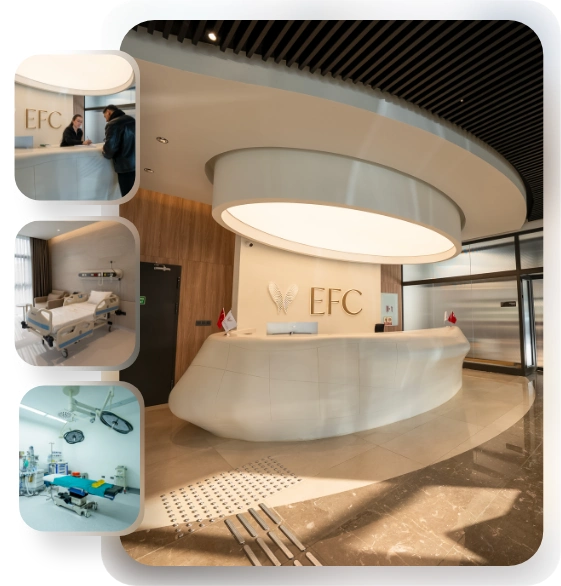
EFC Surgery Center
Comprehensive Care: From Initial Consultation to Follow-Up.
EFC Surgical Medical Center is a center of excellence specializing in the most meticulous fields of surgical medicine, from aesthetic surgery to interventional treatments—where every step progresses with refined attention. Medical excellence, aesthetic precision, and uncompromising ethical standards converge on the same path. Our subspecialty-trained experts aim to achieve natural and reliable results by delivering evidence-based care supported by modern imaging, standardized protocols, and safety systems. From consultation to recovery, your care is coordinated end-to-end with clear communication, transparent planning, and genuine respect for your health.
What is benign prostatic hyperplasia and how does HoLEP help solve this problem?
The prostate gland is an important gland in men located just below the urinary bladder, with the urinary channel passing through it. This organ, which is about the size of a walnut in younger years, gradually begins to grow at the cellular level over time due to aging and hormonal changes. This growth process is generally benign, meaning it does not contain cancer cells. However, as the prostate enlarges, it begins to exert physical pressure on the urinary channel passing through it, much like a narrowing tunnel. The urinary bladder has to push fluid through this narrowed channel in order to expel urine and therefore makes much greater effort than normal. In the early years of the disease, attempts are made to control this condition with certain medications. These medications aim to relieve the patient by relaxing the muscles around the urinary channel or by reducing the volume of the prostate to some extent.
However, in later years, medications may begin to fail to produce the expected effect. The narrowing may become so pronounced that the muscles of the urinary bladder begin to tire and deteriorate structurally. HoLEP surgery comes into play precisely at the point when this physical obstruction needs to be mechanically eliminated. The fundamental philosophy of this procedure is to separate the enlarged inner tissue obstructing the urinary tract from the intact outer shell surrounding it. This is often compared to removing the fruit inside an orange in one piece without damaging its peel. Once the fruit portion (that is, the adenoma tissue obstructing the urinary tract) is removed, only the intact shell remains, and urinary flow becomes easier thanks to the wide space in the center. The HoLEP method performs this separation process entirely through a closed approach using high-technology laser energy.
What are the symptoms of difficulty urinating and why do patients turn to HoLEP surgery?
Benign prostatic hyperplasia is more than just a physical health problem; it is a process that deeply affects patients’ daily lives, sleep patterns, and psychological well-being. Patients often have to plan their social lives according to the location of toilets. Waking up repeatedly at night causes severe fatigue and concentration problems the following day. Many men become reluctant to take long bus journeys or go to the cinema. Situations such as prolonged urination and having to wait in public toilets may also bring social anxiety. At the point when medications are no longer sufficient, patients begin to investigate surgical options in order to regain their quality of life.
The complaints frequently encountered in patients are as follows:
- Frequently waking from sleep at night
- Difficulty starting urination
- Weak and thin urinary stream
- Intermittent urination
- Feeling of incomplete bladder emptying
- Sudden urinary urgency during the day
- Concern about not reaching the toilet in time
- Dribbling after urination
When these symptoms reach a point where they restrict the patient’s life, the need arises to remove the excess tissue inside the prostate. Because HoLEP surgery targets the anatomical narrowing underlying these complaints, it has become a frequently preferred option today for patients seeking surgical treatment.
How does laser technology work in HoLEP surgery?
At the core of HoLEP surgery lies Holmium:YAG laser technology, which has revolutionized the medical field. The most important feature of this laser system is that the energy it emits is absorbed very rapidly by the water in the tissue. Considering that a large proportion of the tissues in the human body consist of water, the laser beam transfers its energy to a very narrow area the moment it contacts the tissue. The penetration depth of the laser into the tissue is only around 0.4 millimeters. This depth, which is even less than half a millimeter, allows the surgeon to proceed extremely precisely and safely in the operating field. Since laser energy does not spread beyond the targeted area, the likelihood of causing heat damage to the nerves that pass just outside the prostate capsule and control sexual functions or urinary continence muscles is quite low.
During the operation, the laser does not only separate the enlarged tissue from the capsule. At the same time, while cutting the tissue, it instantly seals the small blood vessels in that area. Thanks to this vessel-sealing process, called coagulation in medicine, blood loss during surgery is generally kept at very low levels. Keeping bleeding under control allows the surgeon to see the operative field very clearly and also speeds up the patient’s postoperative recovery. This laser system, which transmits pulsed energy waves, supports the release of prostate tissue by following natural boundaries without forcing or tearing the tissue.
What are the differences between HoLEP surgery and older methods?
For many years, there were two main methods widely used in prostate surgery. One was the closed method known as TUR-P, and the other was open prostate surgery. In the TUR-P method, the urinary channel was entered and prostate tissue was shaved from the inside outward in small pieces using a heated wire loop powered by electrical energy. However, during this shaving process, the natural boundary between the enlarged tissue and the prostate capsule usually could not be identified. Therefore, a certain amount of prostate tissue was expected to remain inside. Since this remaining tissue could grow again over the years, recurrence of the disease and the need for a second operation could arise in some patients. Open surgery, on the other hand, was preferred for very large prostates. The prostate was completely removed through an incision in the abdomen, but this procedure had disadvantages such as a high risk of bleeding, prolonged hospital stays, and a painful recovery period.
HoLEP surgery is a technique that combines the advantageous aspects of these two methods. It adopts the principle of “removing the tissue completely from the capsule” used in open surgery, but performs this without making any abdominal incision, entirely through a closed approach by entering through the urinary channel. Because the enlarged tissue is completely separated from the capsule, care is taken not to leave behind tissue that could grow again. In addition, the solutions used as irrigation fluid during surgery in older closed methods carried a risk of disturbing the body’s sodium balance if absorbed into the bloodstream (TUR syndrome). In the HoLEP procedure, only isotonic saline solution compatible with the human body is used. In this way, even if the operation takes longer, dangerous fluctuations in the patient’s blood values are largely prevented.
Contact us now to get detailed information about our treatments and procedures and to schedule an appointment!
Is HoLEP surgery suitable if the prostate is very large?
For many years, one of the greatest obstacles encountered in prostate surgery was prostate volume. If the prostate exceeded 80 or 100 grams, completely removing this tissue using older closed shaving methods could take hours and the risk of bleeding could increase excessively. For this reason, open surgery had to be recommended for patients with very large prostates. Patients who decided on open surgery, however, were often concerned about the prolonged catheter period after surgery and pain at the incision site.
HoLEP surgery, on the other hand, is a technique that can be applied regardless of the volume or size of the prostate. Whether the prostate is 40 grams or has reached an enormous size exceeding 200 grams, the principle of laser separation does not change. Anatomically, the prostate capsule and the plane of the enlarging tissue inside it exist at every volume. The surgeon uses the laser to identify this plane and peel the tissue away. When the prostate is very large, the operation naturally may take somewhat longer, but there is no need to create an open wound on the patient’s body. This makes the treatment process much more acceptable and comfortable, especially for patients with very large prostates who are afraid of open surgery.
Do heart diseases or the use of blood thinners prevent HoLEP surgery?
A significant proportion of patients presenting with complaints of benign prostatic hyperplasia belong to an older age group. Many men in this age group also have cardiovascular problems such as hypertension, coronary artery disease, pacemaker use, rhythm disorders, or previous heart attacks. These patients regularly use blood-thinning medications to prevent clot formation in their vessels. When standard prostate surgery is planned, these medications usually need to be stopped several days before surgery to reduce the risk of bleeding. However, stopping the medication may bring life-threatening risks such as clot formation in the heart or brain. If the medication is not discontinued, uncontrolled bleeding may occur during surgery.
The ability of the Holmium laser used in HoLEP surgery to instantly seal blood vessels while cutting tissue (coagulation) greatly alleviates this challenging situation. Thanks to the very tight control of bleeding, many patients may not need to completely discontinue blood-thinning medications following joint evaluation by the relevant cardiology and anesthesia specialists. Sometimes the medication dosage is adjusted, and sometimes a switch is made to shorter-acting medications. Maintaining fluid balance during the operation with isotonic solutions also does not place excessive strain on the heart. Thanks to this careful management, high-risk heart patients also have the opportunity to undergo prostate surgery under safe conditions.
Which tests and preparations are performed before HoLEP surgery?
To determine whether a patient is suitable for HoLEP surgery and to plan the operation in the safest possible way, a comprehensive evaluation process is first carried out. The aim is to clearly reveal the structure of the prostate, the current condition of the urinary bladder, and the patient’s general health profile. It is also medically very important to confirm whether the enlargement of the prostate is truly benign.
The main steps performed during the preoperative evaluation process are as follows:
- Complete blood count tests
- Complete urinalysis
- Prostate-specific antigen (PSA) test
- Physical prostate examination
- Uroflowmetry (urinary flow rate test)
- Urinary system ultrasonography
- Anesthesiologist examination
These tests help determine whether the patient has an active urinary tract infection. If an infection is present, it is planned to be treated with antibiotics before surgery. Suspicion of prostate cancer is evaluated through the PSA test and examination, and a biopsy may be performed beforehand if necessary. Ultrasound is used to measure the volume of the prostate and how much residual urine remains in the urinary bladder after the patient urinates. Uroflowmetry graphically determines the strength of urinary flow. In light of all these data, together with the anesthesiologist, it is confirmed that the patient is ready for surgery.
Contact us now to get detailed information about our treatments and procedures and to schedule an appointment!
How are the separated tissues removed from the body during the HoLEP operation?
In HoLEP surgery, when the prostate tissue is separated in one piece or several large pieces, much like peeling the inside of an orange away from its peel, these large tissue masses are dropped into the urinary bladder. Thanks to its flexible structure, the urinary bladder is a very suitable and safe cavity for temporarily holding these tissues. However, because there is no incision, it is not possible to remove these large tissue pieces directly through the natural urinary channel.
At this stage, the second important part of the operation begins. A special mechanical device called a “morcellator” is inserted through the urinary channel. This device can be thought of as a miniature tissue grinder and vacuum system. With a continuous flow of water, the free tissues inside the bladder are drawn toward the tip of the device, minced by tiny blades rotating at very high speed, and immediately suctioned through a closed vacuum tube into collection containers outside the body. After all tissues have been completely removed, the collected materials are sent to the pathology laboratory for examination. Unlike vaporization methods, the tissues are not destroyed, allowing them to be examined cell by cell in the laboratory to investigate whether the patient has any hidden cancer cells that were previously undetected.
How long does recovery and hospital stay take after HoLEP surgery?
After the operation is successfully completed, a temporary urinary catheter is inserted to allow the urinary tract to rest and to maintain fluid circulation inside the bladder. Since bleeding control can be achieved very effectively with the laser in HoLEP surgery, the duration patients need to remain catheterized is quite short compared with traditional operations. Most of the time, patients spend only the night of surgery in the hospital and their catheters are removed painlessly the following day. After the catheter is removed, it is observed whether the patient can urinate comfortably on their own and empty the urinary bladder. After years of narrowing, patients generally notice the visible increase in their urinary flow rate immediately.
The first few weeks after discharge from the hospital are a recovery period during which sensitivity in the urinary tract continues. During this period, a mild burning or stinging sensation while urinating or a pink color in the urine is considered normal and generally decreases spontaneously over time.
The steps patients are advised to follow at home after discharge are as follows:
- Drinking plenty of water throughout the day
- Avoiding heavy lifting
- Consuming fiber-rich foods to avoid constipation
- Avoiding strenuous activities such as cycling
- Taking light, non-strenuous walks
Although the recovery process varies from person to person, patients can generally return to their daily routines, desk jobs, and social lives within a few days. Complete healing of the body’s internal tissues and complete disappearance of complaints, however, is an anatomical adaptation process that may take several months.
Is there a possibility of urinary incontinence after HoLEP surgery and how are the muscles protected?
One of the issues men fear most when prostate surgery is mentioned is the possibility of permanent urinary incontinence after surgery. The muscles that allow a person to voluntarily hold urine (sphincter) are located very close to the lower tip of the prostate gland. While the enlarged prostate tissue is being separated during surgery, there is a risk that these muscles may be mechanically stretched or affected by the heat of the laser.
In the HoLEP method, surgeons use a delicate technique called “early apical release” in order to minimize this risk. At the very beginning of the operation, the prostate attachments close to the urinary continence muscles are gently separated with the laser. In this way, attempts are made to prevent the muscles from being stretched when the tissues are moved during the remainder of the operation. Nevertheless, during the first weeks after surgery, some patients may experience sudden urgency, inability to reach the toilet in time, or leakage of a few drops of urine when coughing. The main reason for this is usually not damage to the urinary continence muscle, but rather the inability of the urinary bladder muscle (detrusor), which has thickened after years of struggling against obstruction, to immediately adapt to the new open space after surgery and its tendency to contract excessively. As the bladder adapts to the new situation and the pelvic muscles relax, this condition generally improves within a few weeks or months. With experienced surgeons, the likelihood of permanent urinary incontinence is kept at very low levels.
How are sexual life and erectile function in men affected after HoLEP?
Another important concern occupying patients’ minds is whether surgery will damage sexual functions. The blood vessels and nerve bundles responsible for penile erection in men pass like a network just outside the prostate capsule. In HoLEP surgery, the fact that the laser penetration depth into tissue is only fractions of a millimeter largely prevents this energy from passing through the capsule and damaging the nerves outside it. Thanks to this principle of anatomical protection, patients who have healthy erectile function before surgery are expected to preserve this function after surgery as well.
The main aspect of sexual function that is likely to change is ejaculation. The aim of the operation is to widen and open the obstruction at the bladder neck. When this area is opened, in a significant proportion of patients, the semen released at the moment of orgasm flows backward into the urinary bladder, where resistance is lower, instead of being expelled outward (retrograde ejaculation). During sexual intercourse, the patient experiences the same pleasure, sensation, and erection; only there is no outward discharge of fluid. This fluid, commonly referred to as a “dry orgasm,” is later expelled from the body without any problem along with urine. This condition is not a complication that reduces a man’s sexual potency, but rather a natural consequence of the urinary tract having been successfully widened, and it does not harm the patient’s health.
In which situations should HoLEP surgery not be delayed?
Although benign prostatic hyperplasia is usually a slowly progressive process, in some cases the course of the disease can reach a level that directly threatens kidney health and the patient’s overall systemic condition. Patients may sometimes postpone treatment for years due to fear of surgery. However, continuous accumulation of urine in the bladder and inability to empty it completely can increase pressure inside the bladder and cause urine to flow backward toward the kidneys.
The situations in which surgical intervention is recommended not to be postponed are as follows:
- Requirement for catheter insertion due to inability to urinate
- Frequently recurring urinary tract infections
- Formation of bladder stones due to sediment accumulating in the urinary bladder
- Recurrent urinary bleeding caused by rupture of vessels on the surface of the prostate
- Detection of a high amount of residual urine in the bladder
- Enlargement of the kidneys due to backward pressure (hydronephrosis)
The appearance of these findings is a sign that the obstruction has begun to cause serious damage that may progress as far as kidney failure. Even in patients who have reached this stage, HoLEP surgery makes an important contribution to protecting the kidneys and helping the patient return to normal life as soon as possible by opening the urinary tract rapidly and effectively. Planning the surgical process at the right time and in experienced hands plays a key role in preventing more serious health problems that the patient may otherwise experience in the future.
Blog Posts

Hair Transplant Prices
Hair transplant prices vary depending on the technique to be used, the number of grafts, [...]
Read More
21
Jan
Jan
Most Preferred Countries for Plastic Surgery
Among the most preferred countries for plastic surgery, Turkey, South Korea, the United States, and [...]
Read More
21
Jan
Jan

Plastic Surgery Prices
Plastic surgery prices vary depending on the type of procedure, geographical location, the surgeon’s experience, [...]
Read More
21
Jan
Jan
Physical Therapy Prices
Physical therapy prices vary depending on the number of sessions to be applied, the treatment [...]
Read More
21
Jan
Jan

Dental Treatment Prices
Dental treatment prices vary depending on the type of procedure to be performed, the quality [...]
Read More
21
Jan
Jan
Most Preferred Countries for Dental Treatments
Among the most preferred countries for dental treatments are Turkey, Hungary, Mexico, and Thailand. These [...]
Read More
21
Jan
Jan